Your dog's diet is a powerful tool to effectively manage various medical conditions
J
Arthritis and joint support
If your dog has been diagnosed with arthritis and you would like help creating a safe, balanced home-prepared diet, you can learn more about my nutrition consultations below.
Last updated: August 2026 by Kristina Johansen
What can I feed my dog with arthritis?
Diet is an important, and often underestimated, part of arthritis management. The right nutrients can help support joint health, influence inflammation, and significantly improve mobility and quality of life.
Arthritis, or more accurately known as osteoarthritis (OA) or degenerative joint disease (DJD), is one of the most common chronic health conditions seen in dogs. It can affect younger dogs after injury, but it is particularly common in middle-aged and older dogs.
One very important thing to understand is that arthritis pain is not something dogs simply have to live with as they get older. For this reason, the most crucial first step in managing arthritis is usually pain control. When pain is well managed, dogs can move more comfortably, rebuild strength, and stay active. In many cases, this requires medication prescribed by your veterinarian.
However, this is only part of the picture. Arthritis is an active inflammatory condition, meaning there is ongoing inflammation within the joint. While medication helps control both pain and inflammation, diet and supplements also play a key role in supporting joint health.
Before we dive into the role of nutrition, it helps to first understand what arthritis is and how it develops. This makes it easier to see how different management strategies can help support dogs with arthritis, and which approach may be most appropriate for you and your dog.
In this guide, we’ll cover:
- What arthritis is
- Why it develops
- What signs to look for
- Body weight and joint health
- How diet and supplements can help
If you’d prefer to jump straight to the nutritional management section, simply click here.
What is arthritis, and why did my dog develop it?
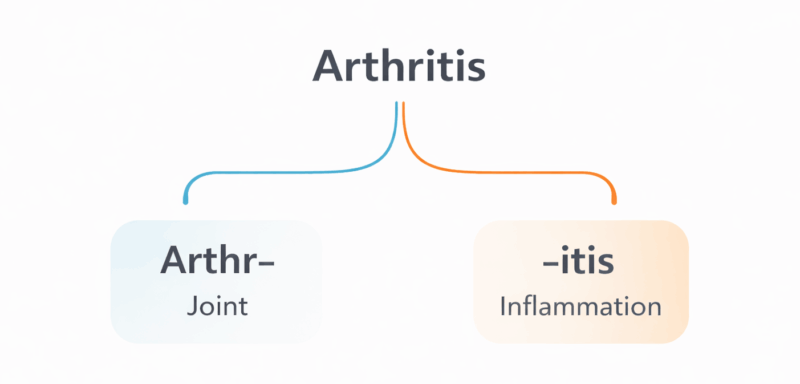
Inside every joint is a smooth, rubbery material called cartilage. Think of it as a shock-absorbing cushion that sits between the bones and allows the joint to move smoothly.
Healthy cartilage contains:
- Special cells that maintain and repair it
- Gel-like substances that hold water and give cartilage its springy, cushioning quality
- Strong collagen fibres that provide structure and strength
Because cartilage contains a lot of water, it acts a bit like a sponge. It compresses when the joint takes weight, then springs back into shape. Collagen fibres help hold everything together and keep the joint surface smooth and stable.
Arthritis develops when the cartilage inside the joint gradually begins to break down. As cartilage loses its structure and water content, it becomes thinner and less resilient. The joint surface is no longer smooth, and movement becomes less fluid.
At the same time, inflammation develops inside the joint and speeds up the damage to the cartilage. In more advanced stages, the protective cushion can become so worn that bone rubs against bone, leading to pain, stiffness, and difficulty moving.
So, arthritis isn’t simply “wear and tear”. It is a progressive condition that involves both damage to the joint structures and ongoing inflammation.
While any dog can develop arthritis, certain factors increase the risk:
- Age
- Large and giant breed size
- Excess body weight
- Previous joint injury
- Developmental joint conditions (such as hip or elbow dysplasia)
- Genetic
The signs and symptoms of arthritis in dogs
The most common signs of arthritis in dogs include:
- Stiffness, especially after rest
- Difficulty getting up or lying down
- Reluctance to jump or climb stairs
- Slower walks
- Behavioural changes such as less playful, more irritable, or licking and chewing at painful joints.
Because arthritis develops gradually, these changes are often mistaken for “just getting older”. As a result, many dogs are diagnosed later than ideal, once the disease has already progressed.
If you notice even subtle changes in your dog’s mobility or behaviour, please do speak to your vet. Earlier management usually leads to better long-term outcomes.
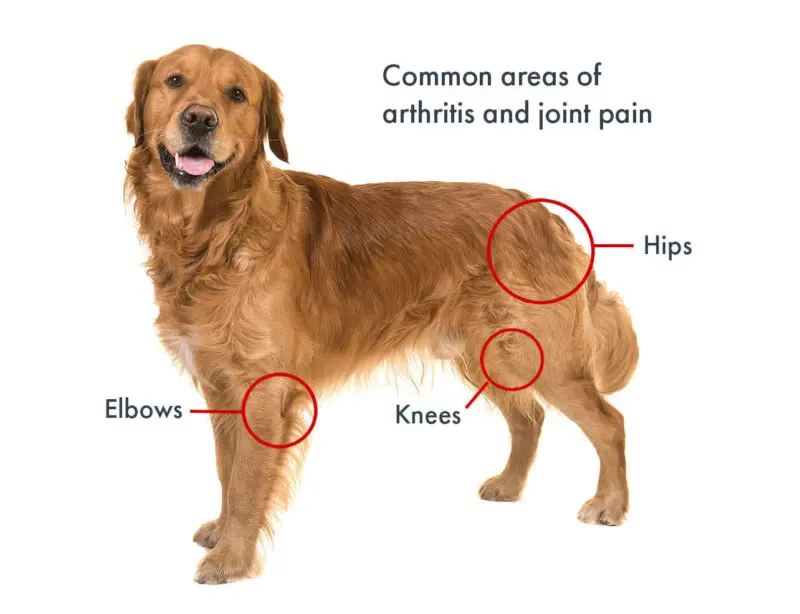
How is canine arthritis typically managed?
One important thing to understand is that X-ray findings don’t always match how a dog feels. Some dogs with significant changes on imaging seem relatively comfortable, while others with mild changes can be quite painful. This is why your vet will focus on how your dog is actually moving and behaving, rather than relying on X-rays alone.
Medical management usually involves a combination of approaches, including non-steroidal anti-inflammatory drugs (NSAIDs) and, in some cases, monthly injections such as Librela, to help manage pain.
However, medication is only one part of the plan. Nutrition also plays a key role in a long-term management strategy.
Nutritional management of dogs with arthritis
While there’s no miracle diet for arthritis, the goal is to feed a diet that reduces inflammation, supports joint health, and maintains a healthy body weight. How that looks in practice will be individual to each dog — getting this balance right isn’t always straightforward, especially when arthritis sits alongside other age-related conditions.
Most dogs with arthritis are older, and older dogs often have other health conditions alongside their joint disease. If your dog has been diagnosed with kidney disease, liver disease, or another condition, their dietary needs may be different to what’s outlined here. Always speak with your vet or a qualified nutritionist before making changes.
Below, I have highlighted the key nutritional areas to focus on.
Weight management
If there is one nutritional priority for a dog with arthritis, it is maintaining a healthy body weight. Excess weight does more than add pressure to already painful joints; it increases stress during movement and accelerates cartilage damage.
In addition, fat tissue is not simply extra weight. It actively produces inflammatory chemicals – including some of the same signals that drive cartilage breakdown. So, an overweight dog isn’t just heavier; their body is in a state of low-grade, chronic inflammation, which directly accelerates joint damage.
Studies show that losing as little as 6-10% of body weight in overweight dogs with arthritis leads to significant improvements in pain scores and mobility.
The bottom line: Keep your dog lean. If your dog is overweight, weight loss is one of the most effective ways to improve arthritis and the quality of life.
Not sure if your dog is overweight? A body condition score chart can help you assess your dog’s body condition:
Protein
When a dog has arthritis, keeping their muscles strong is just as important as managing their joints. Muscles act like a support system – the stronger they are, the more they take the load off painful joints. When muscle mass declines, joints have to work harder, and stiffness and lameness often worsen.
Because older dogs naturally tend to lose muscle over time, a diet with enough high-quality protein helps slow that process and keep your dog moving more comfortably for longer.
Do keep in mind that if your dog has kidney disease, liver disease, or another condition that affects how the body handles protein, their protein needs may be different, so it’s always best to check with your vet or a qualified nutritionist
Carbohydrates
Carbohydrates often get vilified, but they’re a great source of energy and have their place in any diet. The key is choosing the right carbohydrates.
For dogs with arthritis, the priority is keeping body weight in check to avoid extra kilos putting more stress on already painful joints. Ingredients such as brown rice, barley and sweet potatoes not only provide digestible energy but also contain fibre, which can help your dog feel fuller without adding too many extra calories – particularly useful if weight loss is a goal.
Fat
Fat is an essential part of any dog’s diet. It makes food palatable, carries fat-soluble vitamins, and provides energy. But in a dog with arthritis, it is worth paying attention to both the amount of fat in the diet and where that fat is coming from.
Fat is high in calories – about twice as many as protein or carbohydrates – so too much can contribute to weight gain.
The type of fat matters too. Omega-6 fats have developed something of a bad reputation. You may have heard them described as “inflammatory” or “harmful”, but that’s an oversimplification.
Omega-6 fats are actually essential. Dogs need them for healthy skin, a properly functioning immune system, and many other normal body processes. The issue is not omega-6 fats themselves, but the balance between omega-6 and omega-3 fats.
Many diets, particularly commercial foods, tend to contain much higher levels of omega-6 than omega-3. In homemade diets that have been professionally formulated, this imbalance is usually corrected.
Antioxidants
Inflammation generates free radicals (unstable molecules that can damage cells). This leads to oxidative stress and further damage to joint tissue. Antioxidants help neutralise these free radicals, making them a valuable addition to the management of arthritis in dogs.
The antioxidants most often discussed in canine arthritis are vitamins C and E. Most commercial diets are already formulated to meet a dog’s vitamin E requirements, so additional supplementation is usually unnecessary and should not be added without guidance from your vet or a qualified animal nutritionist.
In contrast, balanced home-prepared diets must include a vitamin E supplement as part of their formulation. A qualified animal nutritionist will account for this when designing the diet, ensuring it is added in the correct amount.
Dogs produce their own vitamin C, so supplementation isn’t usually necessary. Instead, including a variety of fruits and vegetables in the diet can help provide natural antioxidants. Aim for a range of colours, with plenty of leafy greens and brightly coloured options. If you’re unsure which fruits and vegetables are safe or how best to feed them, I’ve put together a practical guide to fruits and vegetables for dogs, which you can find here:
Fruits and vegetables for dogs: health benefits and how to feed them
Omega-3 fatty acids (fish oil)
If there is one supplement worth prioritising in a dog with arthritis, it is omega-3 fatty acids from fish body oil.
Omega-3 fatty acids, particularly EPA and DHA, are among the most evidence-supported nutritional tools for arthritis in dogs. Clinical trials have consistently shown that increasing dietary omega-3 intake can reduce inflammatory signals associated with joint pain and improve mobility.
For dogs, the most reliable source of EPA and DHA is a good-quality fish body oil supplement. It is important to use fish body oil rather than cod liver oil, as cod liver oil contains high levels of vitamins A and D, which can become excessive (and potentially harmful) when given at higher doses.
The amounts of EPA and DHA used in arthritis studies are higher than typical maintenance doses. Because excessive intake can cause problems such as gastrointestinal upset, altered clotting and nutrient imbalance, it is vital that the dose is discussed with your vet or a qualified nutritionist.
Choose an unflavoured product with no added ingredients and a high EPA and DHA concentration per ml of oil.
Some options include:
- Lamberts Fish Body Oil
- NOW Foods Ultra Omega-3
- Wiley’s Fish Oil Minis
If your dog isn’t tolerating fish oil, alternatives include:
- Lamberts Vegan Omega-3
- Nordic Naturals Algae Omega softgels
- Sports Research, Vegan Omega-3
It is generally best to use capsules rather than bottled oils, as the oil is better protected from air and light, making it less prone to oxidation (rancidity).
Glucosamine and chondroitin
Glucosamine and chondroitin are among the most widely used joint supplements for dogs with arthritis. They’re found in countless products and are frequently recommended by many vets.
Both Glucosamine and chondroitin are naturally present in cartilage and connective tissue, so the logic seems straightforward. If they are building blocks of cartilage, supplementing them should help protect or rebuild joints. It’s an intuitive idea.
What does the evidence actually show?
A 2022 systematic review pooled and analysed 72 trials from 57 studies on joint supplements in dogs and cats with osteoarthritis. While some laboratory and early-stage studies suggest glucosamine and chondroitin may have modest benefits, most real-life studies in dogs show little to no meaningful benefit for pain relief. The authors concluded that these products should no longer be routinely recommended for the management of osteoarthritis pain.
So why don’t these supplements seem to work in practice?
One possible explanation is poor absorption. Studies in dogs show that only a small proportion of orally administered glucosamine (around 12%) and chondroitin (around 5%) is absorbed into the bloodstream. This means that very little may reach the joints in amounts high enough to have a meaningful effect.
Now, I am certainly not suggesting it is wrong to use glucosamine and chondroitin, but the evidence is not as strong as many assume. These products can be expensive, and I want to make sure you are spending your money wisely.
I know this may come as a surprise to many. If you’d like to learn more about joint supplements for arthritis, including what the research shows, what actually works and why results can be mixed, you can read more here:
Do joint supplements work for dogs? What the science says
Green-lipped mussels (Perna canaliculus)
Green-lipped mussels (GLM) from New Zealand are a marine source of omega-3 fatty acids. In addition to EPA and DHA, they contain ETA (eicosatetraenoic acid), a less common omega-3 that may contribute to anti-inflammatory effects. GLM products also contain small amounts of glycosaminoglycans and antioxidant compounds.
Green-lipped mussel shows some promise. Several clinical trials in dogs with osteoarthritis have reported improvements in pain and mobility with GLM supplementation. However, the evidence is mixed, the results are not entirely consistent, and it appears less effective than standard anti-inflammatory medication. At this stage, it may be a useful addition for some dogs, but it should not be viewed as a replacement for proven pain relief.
Turmeric and curcumin
Turmeric contains curcuminoids, which have anti-inflammatory and antioxidant effects in laboratory studies. However, when tested in dogs with osteoarthritis, the results have been mixed. Some studies have reported improvement, while others have found no measurable benefit. One of the main challenges is that curcumin is poorly absorbed, so the most effective dose and formulation are still unclear.
It is also worth noting that turmeric products can cause gastrointestinal irritation, interact with other medications, and are not without risk at higher amounts. For this reason, they should not be used without guidance from your vet or a qualified nutritionist.
It’s worth keeping in mind that many joint supplements are not regulated in the same way as medicines. This means that purity, dose, and actual content can vary between products.
In addition, placebo effects, particularly in owner-reported outcomes, are well recognised in joint studies. This doesn’t mean improvements aren’t real, but it does make results more difficult to interpret.
Before we wrap up
As you can see, managing arthritis through diet involves more than simply switching to a “joint supplement” or adding a spoonful of turmeric to your dog’s bowl. In my experience, the most effective nutritional approach is one that is tailored to your dog as an individual — taking into account their weight, age, breed, other health conditions, and what they actually enjoy eating.
A professionally formulated homemade diet lets you control every ingredient, ensure the right nutrient balance, and make adjustments as your dog’s needs change over time. It also means you can be confident that omega-3 levels, antioxidant intake, and protein are all appropriate for your dog specifically — not just based on general guidelines.
Key takeaways
- Arthritis is an active inflammatory condition, not simply “wear and tear”.
- Pain management comes first. If your dog is in pain, please speak to your vet. Nutrition should be used alongside, not instead of, prescribed pain relief.
- Body weight is one of the most powerful tools we have. Even modest weight loss in an overweight dog can lead to big improvements in mobility and comfort.
- Antioxidants help reduce further damage to joint tissue. A variety of colourful fruits and vegetables is a simple way to boost antioxidant intake.
- Omega-3 fatty acids from fish body oil have the strongest nutritional evidence for supporting dogs with arthritis and are worth prioritising.
- Glucosamine and chondroitin are widely used, but the evidence for their effectiveness is weaker than many assume. They are generally safe, but may offer only modest or no improvement, so it is important to weigh cost against the likely benefit.
- Green-lipped mussel and turmeric show some promise, but the evidence is still limited and inconsistent. They may be useful additions for some dogs, but should not be relied on as primary treatments.
FAQs on arthritis in dogs
I hope this guide has given you a clear picture of how diet can support a dog with arthritis. If you have further questions, please visit my FAQ page on arthritis in dogs [coming soon], or feel free to contact me directly.
About Kristina
Kristina Johansen, MSc cand. (Animal Nutrition), Cert ACN, is a canine nutritionist with over 15 years of experience. She is a member of the American Academy of Veterinary Nutrition (AAVN) and the European Society of Veterinary & Comparative Nutrition (ESVCN). She specialises in formulating balanced home-prepared diets that meet NRC guidelines, particularly for dogs with medical conditions that require careful dietary management. More about Kristina →
Disclaimer: This blog is for informational purposes only. Please do not create or modify your dog’s diet based on this information. Diet formulation for dogs with health concerns is complex and should be done by a qualified canine nutritionist.
Dog Nutrition Consultations
If your dog has been diagnosed with arthritis and you would like help creating a safe, balanced home-prepared diet, you can learn more about my nutrition consultations below.
Book a Consultation