Your dog's diet is a powerful tool to effectively manage various medical conditions
Diet for dogs with kidney disease
If your dog has been diagnosed with kidney disease and you would like help creating a safe, balanced home-prepared diet, you can learn more about my nutrition consultations here.
Updated March 2026 by Kristina Johansen
What can I feed my dog with kidney disease?
Dietary management is one of the most effective tools we have for supporting dogs with kidney disease and slowing its progression. In fact, a 2020 study found that dogs fed therapeutic kidney diets lived longer and took much longer to develop severe symptoms than dogs on regular diets.
Over the years, I’ve worked extensively with these cases and have seen first-hand the difference a well-formulated diet can make. I’ll share a real case example later in this guide, along with answers to some of the most common questions owners have.
While diet is the main focus of this guide, we’ll also cover:
- The role and function of your dog’s kidneys
- Recognising the signs and symptoms of kidney failure
- Disease stages
- Why hydration matters
Please note that while general advice can be helpful, managing kidney disease through diet is not always straightforward. Kidney disease is progressive, so if you would like to feed a home-prepared diet, it’s important to get it right from the start. Small imbalances in key nutrients can affect both progression and quality of life. This is something I support dog owners with through tailored nutrition consultations. If you’d like help putting this into practice, you can learn more about my nutrition consultations here →
Acute vs chronic kidney disease in dogs: what’s the difference?
There are two main types of kidney disease in dogs: acute and chronic. Acute kidney disease (or acute kidney injury, AKI) usually develops suddenly and can often be reversed. Chronic kidney disease (CKD), on the other hand, is a gradual and progressive loss of kidney function that takes place over months or even years.
Because acute and chronic kidney disease differ in both treatment and prognosis, this blog will focus on chronic kidney disease in dogs rather than acute kidney disease.
What do my dog’s kidneys do?
The main role of your dog’s kidneys is to filter waste products from the blood via urine. These waste products include old cells, the digestive process (foods), medications, and even poisons.
Over 1 million tiny tubes per kidney, called nephrons, perform the filtering. As blood passes from the capillaries through the nephrons, essential chemicals and molecules are kept, while waste products are removed and passed into urine-collecting tubes. They are then expelled from your dog’s body with water as urine.
Filtering blood isn’t all these small but complex organs do. Your dog’s kidneys also help regulate:
- The amount of water in the blood
- Urine production
- Potassium and sodium levels.
And on top of all this, the kidneys produce three important hormones:
- Calcitriol, a form of vitamin D that helps calcium absorption, and in return, keeps bones healthy
- Erythropoietin, which tells the bone marrow to produce red blood cells
- Renin, which helps regulate blood pressure
Given their wide range of essential functions, it’s therefore unsurprising that if the kidneys become damaged or compromised, it can lead to serious health issues.
What are the early signs of kidney disease in dogs?
There are several signs and symptoms of kidney disease to look out for in your dog. These may include:
- Increase thirst
- Increased urination
- Vomiting
- Diarrhoea
- Blood in the urine
- Lack of appetite and weight loss
Most of these signs aren’t specific to kidney disease, and symptoms can vary from dog to dog. This is why it’s so important to know what’s normal for your dog. If you notice anything unusual in their behaviour or habits, contact your vet straight away.
On physical examination, your vet may also identify other signs of kidney failure, such as:
- Pale gums (caused by anaemia)
- Ulcers on the tongue, gums, or inside the cheek
- A swollen abdomen or limbs due to fluid build-up
My dog has been diagnosed with kidney disease – what should I do now?
It can be very worrying to hear that your dog has been diagnosed with kidney disease. However, please take some comfort in knowing that a carefully considered diet is key and can significantly improve your dog’s quality of life and longevity.
To illustrate just how crucial dietary intervention is, take a look at these numbers from one of my clients before and six weeks after implementing a dietary change:
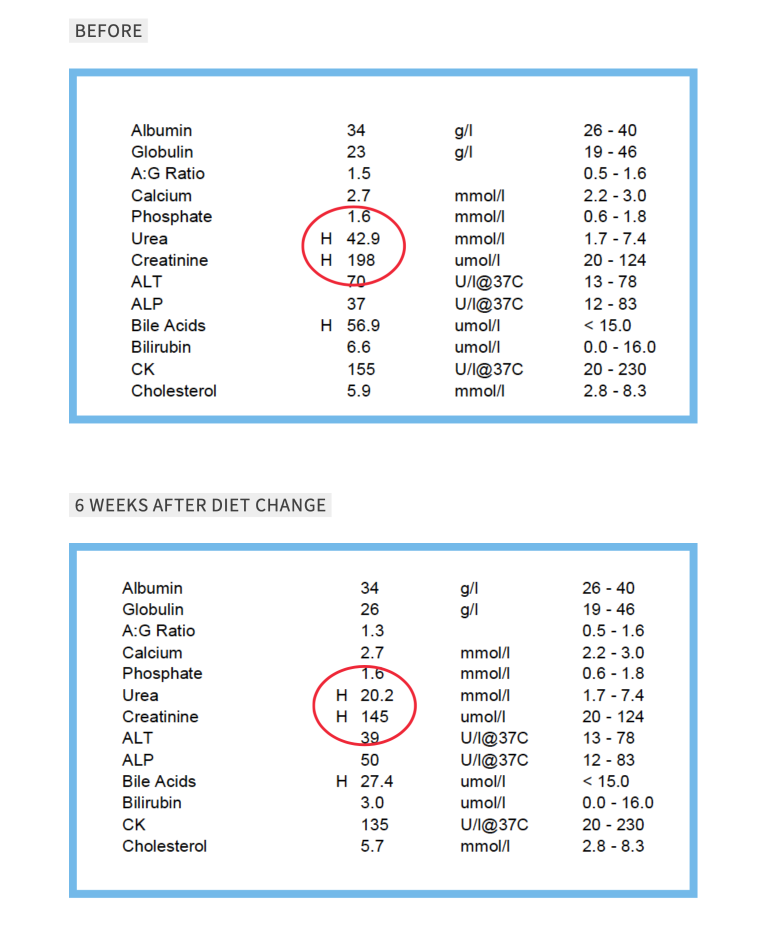
Dietary changes
Before we dive in, it’s important to note that kidney disease changes over time, so nutritional needs aren’t fixed. Diets should be tailored to each dog and adjusted as the disease progresses.
- In earlier stages (stage II and early stage III), the main aim is to slow the disease and preserve kidney function for as long as possible.
- In later stages (advanced stage III and stage IV), the focus shifts towards comfort and quality of life by easing symptoms linked to the build-up of toxins.
Protein
There’s a lot of debate about whether, and when, protein should be restricted in dogs with kidney disease. Traditionally, the standard approach was to restrict dietary protein, and many vets still recommend this today. The idea behind this is simple:
- When protein is broken down, it produces waste products such as urea.
- In healthy dogs, the kidneys filter these wastes out efficiently.
- In dogs with kidney disease, the kidneys can’t cope as well, and waste builds up in the blood.
- This build-up can cause symptoms such as nausea, vomiting, loss of appetite, and fatigue.
- By reducing protein, we can ease this strain and help manage symptoms, particularly in the later stages of the disease.
However, newer research shows the story isn’t so simple. Dogs also need enough protein to maintain muscle, and being underweight or losing lean body mass can shorten survival. This means the ‘right’ protein level often depends on your dog’s condition, body score, and whether protein is leaking into the urine (proteinuria).
So, while protein still needs to be lower than a healthy dog’s diet, terms like ‘reduced’ and ‘restricted’ are all relative.
Where does this leave us?
- In the early stages of CKD, the focus is less on cutting protein and more on slowing disease progression by controlling phosphorus and managing proteinuria (protein leakage into the urine).
- In the later stages, when uremic symptoms become more prominent, a modest reduction in protein can help ease the burden on the kidneys and improve quality of life.
The importance of high-quality protein
It’s not just about how much protein a dog eats — the quality of that protein is key for two reasons:
- High-quality protein has a better amino acid profile and is more digestible. This means a greater proportion of the protein consumed is absorbed and used for maintenance and repair.
- When protein is used more efficiently, less nitrogenous waste (such as urea) is produced. This reduces the amount of waste the kidneys need to eliminate, lowering their workload.
For this reason, it’s essential to consider something called the Biological Value (BV) when choosing the protein source. Biological Value is a ‘rating system’ for protein quality. It measures how well and efficiently a protein can be absorbed and used by your dog’s body. The higher the BV, the more effectively your dog can use the protein and the less waste the kidneys have to deal with.
For example, eggs have a very high BV, nearly 100, meaning almost all the protein in eggs can be efficiently used by the body. Other good sources of high-quality protein include meat, dairy products, fish, and poultry.
It’s important to remember that even when using high-quality protein sources, such as eggs, the overall protein level and other nutrients still need to be considered. For example, feeding too many eggs can cause the dietary phosphorus level to be too high. The key goal should always be to prioritise overall nutritional balance.
Phosphorus
The primary nutrient we need to pay attention to in dogs with kidney disease is phosphorus. When the kidneys aren’t working as they should, they struggle to remove excess phosphorus through the urine. As a result, phosphorus starts to build up in the blood. This disrupts the normal balance between phosphorus and calcium and sets off a chain of changes in the body that can worsen kidney disease. It’s somewhat complicated, but I’ve tried to simplify it in this blog:
Calcium and Phosphorus Balance in Dogs with Kidney Disease
The bottom line is that while phosphorus is an essential nutrient in any dog’s diet, strong evidence shows that restricting it in dogs with kidney disease helps protect kidney function and slow disease progression.
Again, ‘restricted’ is a relative term. Your dog’s phosphorus requirements will depend on kidney function. Ideally, phosphorus should be adjusted in line with creatinine and blood phosphorus results.
Foods particularly high in phosphorus include raw bones, dairy products, organ meats, and egg yolks. This doesn’t mean these foods must be avoided completely; the goal is to restrict phosphorus, not remove it.
So, to wrap up protein and phosphorus: both are important, but they need to be carefully balanced. The goal is to provide enough high-quality protein (but not too much), while keeping phosphorus intake under control. If you’re feeding a commercial food and would like to compare protein and phosphorus levels between diets, you can use my Nutrient Calculator.
Sodium (aka salt)
In humans with kidney disease, reducing sodium has been shown to lower high blood pressure. However, there isn’t the same evidence to suggest that lowering sodium below NRC-recommended levels provides benefits for dogs with kidney disease. In fact, the role sodium plays in canine kidney disease isn’t fully understood, and current guidance generally supports only moderate restriction.
This is because both excess sodium and overly restricted sodium can be harmful. For those feeding home-prepared diets, this is usually less of a concern, as fresh foods naturally contain minimal salt. You can read more about salt and your dog here:
Omega-3 fatty acids
Omega-3 fatty acids can help slow the decline in kidney function by reducing inflammation and supporting healthier blood flow within the kidneys. For this reason, I always recommend omega-3 supplementation for dogs with kidney disease. The key omega-3s to look for are EPA and DHA – the active forms your dog’s body needs. These can be provided through supplements such as fish body oil (not cod liver oil) or by offering oily fish like fresh mackerel or fresh sardines in your dog’s meals. To learn more about fish oil, including my go-to brands for good EPA/DHA levels, you can read more here:
How to Choose the Best Fish Oil for Your Dog.
Antioxidants
Research has shown that dogs with kidney disease experience higher levels of oxidative stress compared to healthy dogs. This is where antioxidants come in – they help control the damage caused by these free radicals.
Think of your dog’s body as a garden. Free radicals are like weeds that spread quickly, while antioxidants are the gardeners who keep them under control so the garden stays healthy. In dogs with kidney disease, more weeds (free radicals) grow, but there are fewer gardeners (antioxidants) to manage them. This imbalance puts extra stress on the body and contributes to disease progression. Adding antioxidants to your dog’s diet is like bringing in more gardeners to restore balance and slow the progression of kidney disease.
To dive a little deeper into the importance of antioxidants and how to choose antioxidant-rich foods for your dog, you can read more here:
The Importance of Antioxidants for Dogs
Water
When a dog has kidney disease, the kidneys lose their ability to produce concentrated urine. To remove waste products, the body has to use more water, resulting in larger volumes of very dilute urine. Many owners assume dogs drink more and therefore urinate more, but in kidney disease, it actually starts the other way around.
Because so much fluid is lost in the urine, dogs then drink more to compensate. Even if water were restricted, the kidneys would still produce dilute urine, which would quickly lead to dehydration. For this reason, keeping your dog well hydrated is essential.
Water needs can be met both through drinking and from the water naturally present in food. Dry dog food typically contains only 8 to 10% water, while canned food is about 75%. Fresh foods vary widely: for example, a cucumber is around 96% water, while a boiled egg is about 75%.
If your dog is reluctant to drink enough, you can make water more appealing by adding a splash of flavour. Try:
- Meat or vegetable broth
- Canned tuna or salmon water
- Watermelon Juice
- Coconut Water
Other simple strategies include soaking kibble, adding extra water to home-cooked meals, offering smaller meals more often, and placing multiple bowls of fresh water around the house so it’s always easy for your dog to drink.
Key takeaways
Managing chronic kidney disease in dogs may seem overwhelming at first. However, with a good understanding of your dog’s dietary needs, you can significantly enhance the quality of life and longevity.
Key nutritional goals:
- Opt for a high-moisture diet to support hydration
- Restrict phosphorus
- Provide moderate, high-quality protein (not too high, not too low)
- Add EPA/DHA (omega-3s) and antioxidant-rich foods to slow progression
- Adjust the diet as the disease stage changes
Meet Pickles
Before we dive into some of the most common questions I’m asked, I’d love to introduce you to Pickles and share a lovely message from her owner:
“Pickles was diagnosed with CKD two years ago and recently the disease has started progressing. With a change of diet, within two weeks, I have a dog who is eating again, has no tummy pain, is sleeping through the night and is as regular as clockwork!!! She is also loving life again; chasing squirrels like there is no tomorrow, not bad for an old lady of 13 years, let alone one with CKD!
The transformation in just two weeks is unbelievable. Thank you again Kristina and I sincerely look forward to working with you to give my beloved Pickles the best quality of life, for as long as she has on earth.”

FAQs on kidney disease in dogs
What are the early signs of kidney disease in dogs?
The most common signs include drinking and urinating more than usual, loss of appetite, weight loss, and reduced energy. Some dogs may also develop vomiting, dehydration, or bad breath. In the early stages of CKD, however, you might not notice any changes at all, and the condition is often picked up by chance during routine blood or urine tests. This is why yearly vet check-ups are so important, especially for senior dogs.
Can kidney disease in dogs be cured?
Chronic kidney disease cannot be cured, once kidney tissue is lost, it cannot regenerate. However, with the right dietary management and veterinary care, progression can be slowed significantly and many dogs maintain a good quality of life for years after diagnosis.
How long can a dog live with kidney disease?
The prognosis is quite variable depending on how early the disease is diagnosed and how well it is managed. In my experience, dogs diagnosed early and managed appropriately can maintain a good quality of life for many years. Diet plays a significant role in this, a 2020 study found that dogs fed therapeutic kidney diets lived longer and took much longer to develop severe symptoms than dogs on regular diets.
At what stage of kidney disease should I change my dog's diet?
Dietary management should begin as early as possible, ideally at diagnosis, even in the early stages. In stages I and II, the focus is on slowing progression by controlling phosphorus and managing protein leakage into the urine. In later stages, the diet shifts towards easing symptoms and maintaining quality of life. The earlier you start, the more you can do to protect remaining kidney function.
Is there a best diet for dogs with kidney disease?
There isn’t a single “best” diet for all dogs with kidney disease, as nutritional needs change depending on the stage of the condition and the individual dog. However, a home-prepared diet formulated by a qualified nutritionist is often the most effective option, as it allows precise control of nutrients such as phosphorus and protein, and can be tailored to your dog’s individual preferences and stage of disease.
My dog has a previous history of pancreatitis; how can I manage both?
For dogs with both kidney disease and pancreatitis, a home-prepared diet is often the best choice, as it can be tailored to manage both conditions. If you rely on commercial food, first clarify whether your dog has chronic pancreatitis, an acute flare-up, or simply a past episode. Some dogs recover fully, while others are repeat offenders who need long-term fat restriction. If pancreatitis recurs, it must take priority, as it can be painful and life-threatening, while kidney disease is progressive but slower to develop.
Should I feed wet, dry, or fresh food to my dog with kidney disease?
Fresh home-cooked food or wet food are generally preferable to dry food because of their much higher moisture content, around 75% or more compared to just 8-10% in kibble. Since hydration is critical for dogs with CKD, a high-moisture diet helps support kidney function and reduces the risk of dehydration. See the Water section above for more tips on keeping your dog well hydrated.
What should I not feed my dog with kidney disease?
Aside from foods that are toxic to all dogs (such as grapes, onions, and leeks), there aren’t any single foods that are completely off the menu for dogs with kidney disease. The overall goal is to keep the diet within an appropriate range for certain nutrients, particularly phosphorus and protein. For example, although eggs are relatively high in phosphorus, small amounts may still be included as part of a balanced diet.
Can I feed my dog a homemade diet if they have kidney disease?
Yes, absolutely, but the diet must be carefully formulated to meet nutritional needs and follow the disease protocol. Working with a qualified nutritionist is a must. Starting dietary management early is essential to slow disease progression, so getting it right from the beginning is key.
Why do dogs with kidney disease need less phosphorus?
When the kidneys aren’t working properly, they struggle to remove excess phosphorus from the body. This leads to rising levels in the blood, which can worsen kidney damage over time. Controlling dietary phosphorus helps restore balance and slow disease progression. See the Phosphorus section above for a more detailed explanation of how this works.
Should protein be restricted in a kidney disease diet for dogs?
This is a topic that still sparks plenty of debate. Dogs with kidney disease generally require less protein than healthy dogs, but severe restriction isn't always necessary. The aim is to provide enough high-quality protein to maintain muscle, while avoiding excess that produces waste the kidneys struggle to clear. See the Protein section above for a more detailed explanation, including how the right amount depends on your dog's individual stage and condition.
Should I give my dog more water if they have kidney disease?
Yes, dogs with kidney disease often lose more fluid through urine, which increases the risk of dehydration. Fresh water should always be available. Feeding a high-moisture diet (such as wet or homemade food) can also help support hydration.
Can dogs with kidney disease still have treats?
Yes, absolutely! There aren’t any foods that must be completely avoided for dogs with kidney disease; the goal is to reduce phosphorus and control protein intake. I don’t tend to worry too much about treats, since they make up only a small part of the diet and the phosphorus they contain usually doesn’t contribute significantly. That said, it’s best to avoid treats that are notoriously high in phosphorus, such as bully sticks, rawhides, pig ears, and raw bones.
What supplements should I give my dog with kidney disease?
The most important supplement for dogs with kidney disease is fish body oil (not cod liver oil). Specifically EPA and DHA, are one of the most evidence-backed nutritional interventions for dogs with kidney disease. They help reduce inflammation and support healthy blood flow within the kidneys, both of which can slow disease progression.
My dog won’t eat the kidney diet my vet recommended. What can I do?
Dogs with CKD often lose their appetite or develop food aversions. Never force-feed, and see your vet if your dog stops eating completely. Small, frequent meals, plenty of water, and flexibility with textures, toppers, or feeding location can all help. If your dog still won’t eat, consider a home-prepared diet. Most dogs find homemade meals more appealing, and recipes can be tailored to tempt even the pickiest eaters.
We have reached the end of the blog. I hope the information has helped you better understand how to manage your dog’s kidney disease successfully. If you have any further questions or need help with your dog’s diet, don’t hesitate to contact me. Your feedback and suggestions are always welcome.
If you would like a deeper understanding of Chronic Kidney Disease in dogs and nutritional management, I have written a comprehensive eBook on the subject. The eBook expands on the information in this blog, providing deeper knowledge, practical advice, treat recipes and additional resources. You can find the book here:
/product/nutritional-management-of-ckd-in-dogs/
About Kristina
Kristina Johansen, MSc cand. (Animal Nutrition), Cert ACN, is a canine nutritionist with over 15 years of experience. She is a member of the American Academy of Veterinary Nutrition (AAVN) and the European Society of Veterinary & Comparative Nutrition (ESVCN). She specialises in formulating balanced home-prepared diets that meet NRC guidelines, particularly for dogs with medical conditions that require careful dietary management. More about Kristina →
Disclaimer: Diet formulation for dogs with kidney disease is complex. For this reason, I do not recommend making significant changes to your dog’s diet without professional guidance.
Dog Nutrition Consultations
If your dog has been diagnosed with kidney disease and you would like help creating a safe, balanced home-prepared diet, you can learn more about my nutrition consultations here.
Book a Consultation