Your dog's diet is a powerful tool to effectively manage various medical conditions
Diet for Calcium Oxalate Stones in Dogs
If your dog has been diagnosed with calcium oxalate stones and you would like help creating a safe, balanced home-prepared diet, feel free to email me.
Updated April 2026 by Kristina Johansen
What can I feed my dog with calcium oxalate stones?
If your dog has calcium oxalate stones, diet is one of the most important tools for reducing recurrence. With over 15 years’ experience working with dogs with this condition, I’ve seen how a properly formulated homemade diet can significantly reduce the risk, even in dogs that have previously required surgery. That said, it needs to be carefully tailored to the individual dog. I’ll share a real case example later in this guide, along with answers to some of the most common questions owners have.
While diet is the main focus of this guide, we’ll also cover:
- Signs and symptoms
- Treatment options
- The importance of urinary pH and urine specific gravity (USG)
- Why hydration matters
Please note that while general advice can be helpful, managing calcium oxalate stones through diet is not always straightforward. Small imbalances in calcium, oxalate, or overall nutrient intake can increase the risk of recurrence. This is something I support dog owners with through tailored nutrition consultations. If you’d like help putting this into practice, you can learn more about my nutrition consultations here →
Let’s dive in!
Why did my dog form calcium oxalate stones, and what are they?
Calcium oxalate stones form when calcium and oxalic acid bind together in urine. Normally, these two chemicals can coexist without causing problems, but if the urine is too acidic—or if their levels are unusually high—they can combine to form calcium oxalate crystals. The bladder cannot dissolve or easily excrete these crystals, so they can lodge and grow into stones.
Dogs (and people) usually produce a protective protein called nephrocalcin in the kidneys, which is released into the urine and helps stop calcium and oxalate from binding. In some dogs, nephrocalcin doesn’t work properly (usually due to genetics), making stones more likely.
Scientists don’t yet fully understand all the interactions between this protein and minerals, but we do know that certain breeds, such as Bichon Frises, Miniature Schnauzers, Yorkshire Terriers, and Shih Tzus, are more prone to calcium oxalate stones, and that bladder stones are more common in male dogs.
The signs and symptoms of calcium oxalate stones (CaOx)
The most common signs of stones in your dog’s bladder are difficulty urinating (dysuria) and blood in the urine (haematuria).
Urinating becomes difficult because the presence of stones in the bladder causes it to swell and become inflamed. Or, the stones physically obstruct the bladder – both of which mean urine isn’t able to pass through to the urethra (the tube that carries urine from the bladder and outside the body)
Blood in the urine (haematuria) happens because the stones rub against the bladder wall, causing damage, irritation and bleeding.
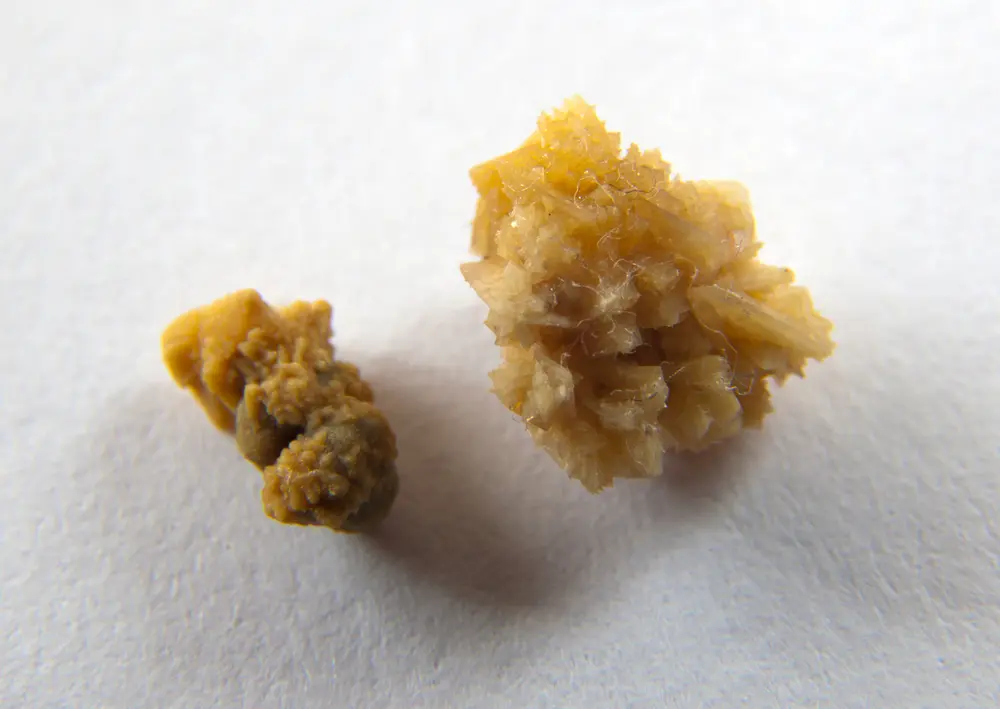
In case you’re curious, this is what a calcium oxalate stone would look like when removed. Imagine what this would feel like in your bladder.
How will my vet treat CaOx stones?
For most dogs, calcium oxalate stones are removed via surgery, which is the simplest, most direct way to remove them.
While there can be other options to remove stones (see below), surgery tends to be the only option when stones are bigger and when there are a lot of them. It’s also the recommended method of removal for male dogs because there’s a higher risk that the stones will cause obstruction and damage to the bladder.
Surgery doesn’t always remove every trace of the stones, which is why, following surgery, vets tend to ‘flush’ the bladder to remove any lingering traces of them. Unfortunately, even with flushing, removing everything can be impossible, meaning some trace of the stones remains. This is why it’s common for calcium oxalate stones to form repeatedly. However, as we’ll discuss later, diet plays a vital role in reducing the likelihood of this happening.
If the calcium oxalate stones are small enough (and there aren’t many), flushing the bladder can remove them. This procedure is usually done when your dog is heavily sedated or under anaesthesia.
Stones can also be removed via a cystoscopy, a cystoscope passed up through the urethra and into the bladder to break down the stones. This produces stone fragments that are small enough to be expelled naturally through the urine. Again, this procedure will only work if the stones are small and there aren’t many of them.
This is not an exhaustive list of how calcium oxalate stones can be removed. Your veterinarian will discuss the options with you to find the one most suitable for your dog.
Diet for calcium oxalate stones in dogs
To decrease the likelihood of your dog forming calcium oxalate stones, there are several key dietary modifications we should be making.
Water
Keep your dog well hydrated. Increased water consumption makes urine more dilute, which in turn dilutes the levels of chemicals that promote stone formation. You can help your dog drink more water by placing several bowls of fresh water in different locations around the house. Ideally, we are aiming for a urine specific gravity (USG) below 1.020 (for reference, water is 1.000).
Oxalate
Avoid foods with high levels of oxalate, such as spinach, sweet potatoes, organ meat and brown rice. Instead, include foods low in oxalate, such as peeled apples, white rice, meats, and fish (except sardines) in your dog’s diet. It’s also a good idea to boil vegetables and drain the water before giving them to your dog – this helps reduce their oxalate levels.
It’s worth noting that not all oxalate comes from the diet. Some is naturally produced in the dog’s body, mainly by the liver. Even so, limiting high-oxalate foods in your dog’s diet is an important step in preventing calcium oxalate stones.
Protein
In people, eating a lot of animal protein is linked with a higher risk of calcium oxalate stones. In dogs, however, the picture looks different. Studies suggest that dogs fed foods with moderate to higher protein levels actually had fewer calcium oxalate stones, especially when the protein comes from good-quality sources. The takeaway is that both too little and too much protein may cause problems. For homemade diets, the goal is to provide the right amount of high-quality protein for your dog’s needs.
Calcium
Many dog owners worry about adding calcium to their dog’s homemade diet because of the name “calcium oxalate stones.” But research shows that avoiding it can actually make things worse. Calcium binds to oxalate in the digestive tract, helping to limit how much is absorbed and passed into the urine. Without enough calcium, more oxalate enters the urine and increases stone risk. Calcium is also an essential mineral for overall health, and a deficiency can lead to serious problems such as osteoporosis.
The key is balance: provide enough calcium to meet your dog’s needs and reduce oxalate absorption, but not so much that it drives excess calcium into the urine. Because the amount must be very carefully controlled, calcium should only be added under the guidance of a qualified professional.
Sodium
Although research in dogs has shown that increasing sodium in prescription diets can sometimes help by encouraging more drinking and diluting urine, this approach isn’t suitable for homemade diets. Adding extra salt can increase calcium loss in urine and raise the risk of stones. A safer strategy is to focus on boosting water intake by adding moisture to meals.
Vitamin D
Vitamin D helps dogs absorb calcium, but too much can lead to greater calcium absorption from food and more calcium being passed into the urine. For that reason, homemade diets should meet, but not exceed, a dog’s vitamin D requirements.
Vitamin C
When vitamin C is broken down in the body, it produces oxalate. Supplementing with vitamin C can therefore raise oxalate levels, so it’s best avoided in dogs prone to calcium oxalate stones. Additionally, dogs produce their own vitamin C, so there’s no need or benefit to adding extra in a homemade diet.
Vitamin B Compound
Vitamin B6 helps prevent excess oxalate from being produced in the body. Since B vitamins are water-soluble and easily lost in urine — and dogs with calcium oxalate stones are encouraged to drink more to keep their urine dilute — ensuring enough vitamin B in your dog’s diet is essential.
Fish oil
Calcium oxalate stones can irritate the bladder wall and cause inflammation. To help reduce this inflammation, you can give your dog a fish body oil supplement. However, avoid cod liver oil, as it contains vitamin D (see above).
Urine pH
Calcium oxalate stones form in urine that is too acidic (less than 6.5). So another way calcium oxalate stones can be prevented is by maintaining a more basic urine pH – ideally between 6.5 and 8.0. For reference, healthy dogs usually have a urine pH between 6.0 and 7.5.
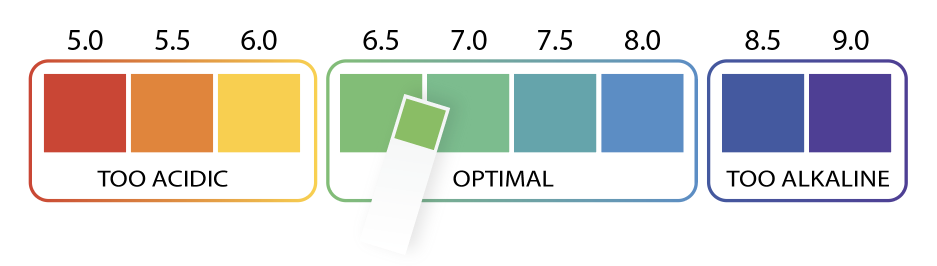
Diet can influence pH. Generally, high-protein foods tend to make urine more acidic, while carbohydrate-rich foods can make it more alkaline. Other factors, such as overall diet balance and health conditions, also play a role.
If you want to monitor your dog’s urine pH at home, you can test it using a pH strip. Catch some of the first urine of the day midstream, preferably before a meal. If the urine is too acidic, pH can be raised with a potassium citrate supplement — but this should only be done under professional guidance.
Just keep in mind that urine pH naturally varies. The key is to monitor the pH and know where you are, but not to panic if the urine remains more acidic than you would like. And remember, it is more important to keep your dog’s urine dilute (<1.020), rather than chasing a “perfect” pH.
Key takeaways
Bladder stones aren’t a pleasant thing for a dog to develop. They can be extremely painful and even potentially fatal. The good news is that by following dietary recommendations and monitoring urine, you can significantly reduce the chances of stones returning in dogs that have had them before.
Key nutritional goals include:
- Encourage increased water consumption to keep urine dilute
- Choose a high-moisture diet
- Avoid high-oxalate foods and Vitamin C supplements
- Provide balanced calcium intake and avoid excess vitamin D
- Consider a fish body oil supplement
Meet Bobby
Before we move on to some frequently asked questions, I’d like to introduce you to Bobby and share this message I received from his owner.
“Thank you Kristina. 18 months on your diet for our calcium oxalate stone forming dog and we have no further stones and bladder is in good health. Prior to your diet his stones returned 9 months after surgery. Massive thank you for all your help and advice“

FAQs on calcium oxalate in dogs
Do you have a list of the oxalate content in foods?
There isn’t a single, definitive list of oxalate values for foods. Levels can vary depending on where and how a food is grown, the plant variety, and even how it’s prepared. For example, boiling can reduce oxalate content. Different studies also measure oxalate in different ways. Two widely used references are the Harvard Oxalate Food List and the University of California, Irvine Kidney Stone Center tables, both of which provide well-researched guidance.
Is there a best diet for dogs with calcium oxalate stones?
There isn't a single best diet for all dogs with calcium oxalate stones. The goal is to create the right urinary conditions while limiting the building blocks of stone formation. How this is best done can differ from dog to dog. In general, a diet should keep the urine dilute, limit oxalate intake, provide balanced calcium, and avoid overly acidic urine. Wet or homemade diets are preferable to dry diets, as they help increase water intake and support more favourable urine conditions.
How can I prevent my dog from getting calcium oxalate stones again?
Calcium oxalate stones have a high recurrence rate, so starting a prevention-focused diet as early as possible is key. It’s also important to work with your vet to set up a plan for regular urine monitoring, as this helps track risk factors such as urine concentration and pH over time.
How important is water intake for dogs with calcium oxalate stones?
Very important. Keeping the urine dilute is one of the most effective ways to reduce stone risk, as it lowers the concentration of calcium and oxalate. Feeding wet or fresh home-prepared food can help increase water intake, as can adding water to meals or placing several water bowls around the house.
What treats can I feed my dog with calcium oxalate stones?
Low oxalate foods can be used as treats, such as lean meats, poultry, eggs, cauliflower, apples (peeled), strawberries, blueberries, cucumber and melon. In many cases, using part of your dog’s regular diet as treats is the safest and most consistent option.
Can diet dissolve calcium oxalate stones in dogs?
No. Unlike some other bladder stones, calcium oxalate stones cannot be dissolved with diet alone. They usually require surgical removal or other veterinary procedures. However, diet plays a key role in preventing recurrence.
Can a homemade diet help prevent calcium oxalate stones in dogs?
Yes, a homemade diet can be beneficial due to its higher moisture content and the ability to control ingredients. However, it must be carefully balanced and follow appropriate stone-prevention guidelines.
Are high-protein diets safe for dogs with calcium oxalate stones?
Very high-protein diets may increase risk by making the urine more acidic. Most dogs with calcium oxalate stones do better on a moderate amount of high-quality protein that meets their needs without pushing intake too high.
Should I give my dog vitamin C supplements if they have calcium oxalate stones?
Vitamin C supplements are generally avoided in dogs prone to calcium oxalate stones, because high vitamin C intake can increase oxalate in the urine and may raise the risk of further stones.
Should dogs with calcium oxalate stones avoid calcium in their diet?
No, and this is a common misconception. In fact, too little calcium can increase stone risk by allowing more oxalate to be absorbed. The goal is to provide a balanced amount, as both too little and too much can increase risk.
What urine pH is best for preventing calcium oxalate stones in dogs?
Calcium oxalate stones are more likely to form in acidic urine (below pH 6.5). A slightly more neutral pH is generally preferred, alongside keeping the urine dilute.
Is fish oil good for dogs with calcium oxalate stones?
Yes, a fish body oil supplement can be beneficial, as it may help reduce inflammation in the bladder. However, cod liver oil should be avoided, as it contains vitamin D, which can increase calcium absorption and potentially raise stone risk.
Can potassium citrate prevent calcium oxalate stones from forming again?
Potassium citrate is a supplement, not a food, that can help reduce stone risk by making urine less acidic, which may help prevent crystal formation. It is sometimes recommended alongside dietary changes. However, it should only be used under veterinary guidance, as the correct dose will depend on your individual dog.
Is peanut butter bad for dogs with calcium oxalate stones?
Yes, peanut butter is high in oxalate and is best avoided in dogs prone to calcium oxalate stones. Even small amounts given regularly as a treat or to administer medication can contribute to higher oxalate levels in the urine.
We have reached the end of the blog. I hope the information has helped you better understand the necessary changes to manage your dog’s calcium oxalate stones effectively. If you have any further questions or need help with your dog’s diet, don’t hesitate to email me. Your feedback and suggestions are always welcome.
About Kristina
Kristina Johansen, MSc cand. (Animal Nutrition), Cert ACN, is a canine nutritionist with over 15 years of experience. She is a member of the American Academy of Veterinary Nutrition (AAVN) and the European Society of Veterinary & Comparative Nutrition (ESVCN). She specialises in formulating balanced home-prepared diets that meet NRC guidelines, particularly for dogs with medical conditions that require careful dietary management. More about Kristina →
Disclaimer: Diet formulation for dogs with calcium oxalate stones is complex, and recurrence is common. For this reason, I do not recommend making significant changes to your dog’s diet without professional guidance.
Dog Nutrition Consultations
If your dog has been diagnosed with calcium oxalate stones and you would like help creating a safe, balanced home-prepared diet, you can learn more about my nutrition consultations here.
Consultation Details