Your dog's diet is a powerful tool to effectively manage various medical conditions
Diet for dogs with cancer
If your dog has been diagnosed with cancer and you would like help creating a safe, balanced home-prepared diet, you can learn more about my nutrition consultations below.
Updated March 2026 by Kristina Johansen
What can I feed my dog with cancer?
In this guide on diet for dogs with cancer, we will primarily focus on food, but we will also cover a range of other key topics, such as:
- Weight loss
- Getting your dog to eat
- Ketogenic diets
- Supplements
Let’s dive in!
My dog has cancer; what now?
No one wants to be given the news that their dog has cancer. However, if you find yourself in this situation, don’t lose hope. Every day, remarkable treatments are helping countless dogs around the world overcome this devastating disease, and scientific advances are continually leading to new discoveries.
While medical treatments should be guided by a qualified oncologist and your primary veterinarian, you can play a vital role in your dog’s health through proper nutrition. A well-balanced diet can boost your dog’s strength and energy, enhance their overall well-being, speed up recovery, and help them better tolerate treatment and its side effects.
Moreover, good nutrition can help your dog maintain a healthy weight and prevent or reduce muscle wasting – a condition known as cachexia.
Feeding a dog with cancer
As soon as you hear the word ‘cancer,’ you might be tempted to search online for guidance, especially when it comes to what to feed your dog. It’s understandable; cancer is a scary thing.
However, while many ‘cancer diets’ for dogs are widely promoted online, it’s important to remember that cancer is not one single disease. It’s a broad term that covers many different conditions, each affecting dogs in different ways. As a result, there is no one ‘cancer diet’ that suits every dog. Both the disease itself and its treatment can influence appetite, body weight, and how well nutrients are absorbed or tolerated.
In addition, many dogs with cancer are also living with other health conditions such as chronic kidney disease (CKD), pancreatitis, hyperlipidaemia, or obesity. These additional health conditions often place important limits on how much fat, protein, or certain minerals a dog can safely tolerate.
This means that to give your dog the best possible support, their diet should be tailored to their individual needs and the specific type of cancer they’re facing. With this in mind, let’s look at some key guidelines when planning your dog’s diet during their cancer battle.
Calories & nutrient content
If your dog has been diagnosed with cancer, weight loss is often one of the first changes you may notice. This can result from the disease itself, as well as from the muscle wasting and reduced appetite often caused by chemotherapy and radiotherapy.
The good news is that feeding the right type of food can significantly impact your dog’s body condition and overall health.
The aim is to provide your dog with foods they love and tolerate, while ensuring they get all the calories and essential nutrients they need. Doing this not only helps stabilise their weight but also prevents malnutrition.
Some calorie-rich and nutrient-dense food options that most dogs typically favour include:
- Eggs
- Mackerel
- Ricotta cheese
- Lamb
- Beef (20% fat)
Please keep in mind that these foods may be inappropriate for dogs who are prone to pancreatitis or hyperlipidaemia.
Carbohydrates
Carbohydrates are often blamed for ‘feeding’ cancer cells and helping them grow, but the relationship between cancer and carbohydrates is far more complex than that. If you’d like to explore the topic in more detail, you can dig a little deeper here: Do carbohydrates feed my dog’s cancer?
In short, while it’s certainly sensible to limit rapidly digested carbohydrates that cause sharp rises in blood sugar, it’s important to remember that carbohydrates provide fuel for all cells in the body, including healthy ones, and the host’s needs must come first. Eliminating them completely may leave your dog short of fuel. It’s also important to remember that many carbohydrates are rich in antioxidants, which can help protect cells from damage. So, carbohydrates aren’t all bad news.
It’s also worth noting that diets very low in carbohydrates are often higher in fat and protein. This may not be ideal for every dog battling cancer and, in some cases, may even backfire – something we’ll talk about in more detail later.
Just to be clear, I’m certainly not suggesting a high-carbohydrate diet for dogs with cancer. What matters most is choosing an approach that suits your dog’s individual needs.
Good options for high-calorie carbohydrates include:
- Brown rice
- Sweet potato
- Quinoa
- Whole wheat pasta
And here are some low-calorie options:
- Broccoli
- Blueberries
- Apple
- Carrots
- Bell peppers
High-quality protein
Proteins play a crucial role in muscle growth and repair. For this reason, dogs battling cancer may benefit from a higher protein intake, unless they have other health conditions such as chronic kidney disease or hepatic encephalopathy (HE).
Protein quality matters as much as quantity. This is influenced by the amino acids the protein contains and how well your dog can digest and use them. That’s why it can be helpful to consider something called the Biological Value (BV) when choosing the best protein for dogs with cancer.
BV measures how efficiently your dog’s body uses protein. Proteins with higher biological values are absorbed and utilised more effectively, making them a preferred choice.
Good sources of high-quality protein include:
- Eggs
- Meat
- Dairy Products
- Fish
- Poultry
Fats
Dietary fats not only increase the caloric density of the food, but fat also tastes good, which can help encourage eating. This is especially important for dogs with cancer, as the disease often affects their appetite.
As mentioned earlier, higher-fat diets are not appropriate for every dog. In dogs with a history of pancreatitis, fat‑related diarrhoea, or elevated blood triglyceride levels, high‑fat foods may be unsafe and should be used only under professional guidance.
However, if your dog has no prior history of, or suspected, fat intolerance, good sources of fats and high-fat foods include:
- Olive oil
- MCT oil
- Walnut oil
- Hempseed oil
- Flaxseed oil
- Whole eggs
- Fatty cuts of beef
- Fatty fish
- Chicken thighs (preferably with skin)
Ketogenic diets
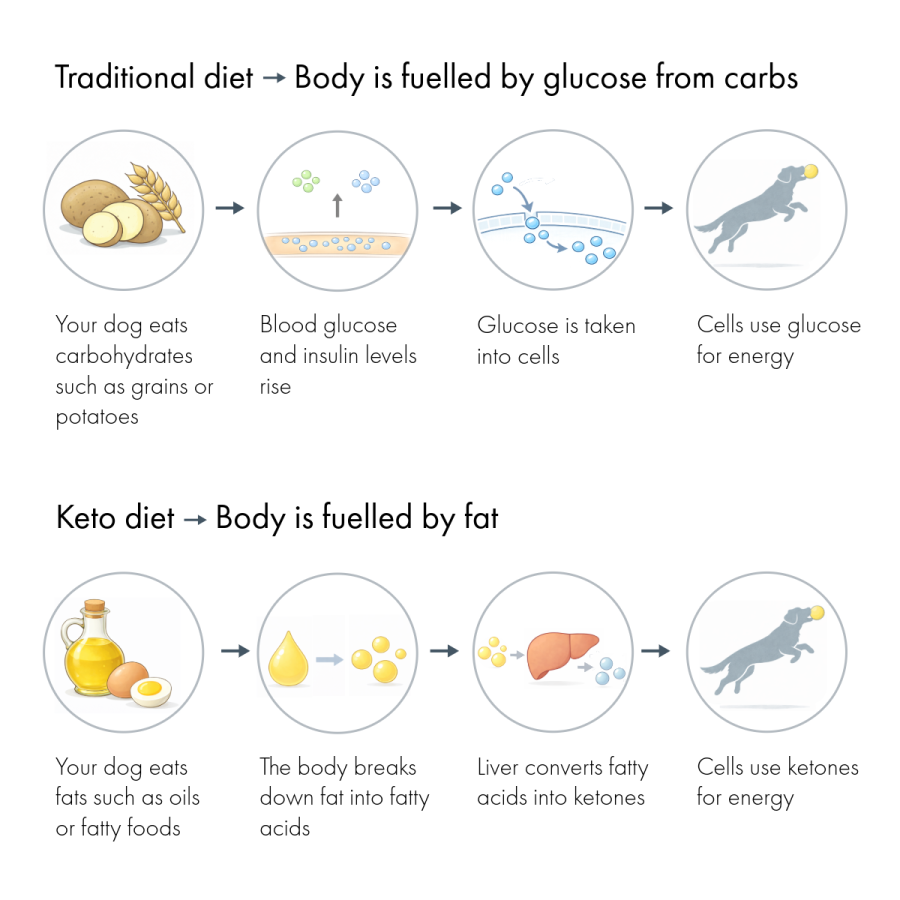
You’ve probably already come across the term ‘ketogenic diet’ in your search for information on the best diet for dogs with cancer. Essentially, it’s a diet that is very high in fat and very low in carbohydrates, designed to push the body into a state called ketosis. When this happens, the body shifts away from using carbohydrates (glucose) as its main energy source and instead relies primarily on ketones produced from fat.
I’m a visual person, so to help explain this more clearly, I’ve created a small illustration.
What’s the goal of a keto diet?
We know that cancer cells rely on glucose for energy. The theory behind a ketogenic diet is that by significantly limiting carbohydrates and increasing fat intake, the body adapts to using fat and ketones for energy. At the same time, cancer cells have less access to the glucose they favour. In theory, this could place cancer cells at a metabolic disadvantage.
Is there evidence to support keto diets for dogs with cancer?
At present, clinical evidence supporting ketogenic diets for dogs with cancer is very limited. Most research in this area has been conducted in laboratory settings or in humans, and translating these findings to dogs is not straightforward. While there are a small number of case reports that suggest potential benefits, there are no robust clinical trials demonstrating that ketogenic diets improve outcomes in dogs with cancer. More research is needed to better understand both their effectiveness and long-term safety.
My two pennies’ worth
Please consider the following:
To reach a state of nutritional ketosis, a dog’s diet typically needs to be extremely high in fat, often exceeding 70% of calories on a dry matter basis. This level of fat intake is not suitable for all dogs and can carry serious health risks.
Digestive upset and pancreatitis
Feeding large amounts of fat is a known risk factor for digestive upset or pancreatitis in dogs – a very painful and potentially life-threatening inflammation of the pancreas. Many dogs with cancer already struggle with nausea, vomiting, or diarrhoea due to the disease itself or its treatment, and a very fatty diet can worsen these symptoms.
High blood fat levels (hyperlipidaemia)
When a dog eats a high-fat diet, the level of fats (triglycerides) in their blood can rise. In dogs with high triglycerides, the usual nutritional approach is to reduce fat intake, not increase it. This is particularly important for dogs receiving certain medications, such as steroids, which can further raise blood fat levels when combined with a high-fat diet.
Unwanted weight gain
Not all dogs with cancer lose weight. Some, especially in the early stages of disease or when taking steroids, may actually gain weight. High-fat diets are very calorie-dense and can lead to excessive weight gain, which may worsen other health problems and reduce overall well-being.
Risk of nutritional imbalances
Many home-prepared “keto” diets are not complete and balanced. They may be low in essential vitamins, minerals, or specific amino acids. This is especially concerning for dogs with cancer, who are already vulnerable and may be losing muscle or struggling to absorb nutrients properly.
For these reasons, it’s important to understand your dog’s tolerance for high-fat food and to carefully evaluate the potential risks before jumping on this type of diet, because the consequences could be severe.
This isn’t meant to discourage you, but rather to encourage a cautious and informed approach. Every dog is different, and dietary changes should always be considered in the context of the individual dog’s health, medical history, and risk factors, and always with the guidance of a qualified dog nutritionist.
Fish Oil/Omega-3 Fatty Acids
Fish oil supplements rich in omega-3 fatty acids such as EPA and DHA are well recognised for their potential benefits in dogs with cancer. They may help reduce inflammation, support immune function, and improve quality of life. Some experimental work suggests potential anti‑tumour effects, but clinical evidence in dogs is still limited.
When choosing a fish oil supplement, opt for fish body oil instead of cod liver oil, which contains high levels of vitamin D and A.
For more information on fish oils for your dog, you can read more here: How to choose the best fish oil for your dog
Flaxseed oil
You may have seen flaxseed oil promoted as an alternative to fish oil. However, the two do not provide the same benefits. Flaxseed oil contains ALA (alpha-linolenic acid), a type of omega-3 fatty acid. However, for the dog’s body to use ALA, it must first be converted into EPA and DHA. These are the omega-3 fatty acids found in fish oil.
Dogs (and humans) are not very efficient at this conversion, meaning that only a tiny amount of ALA is ultimately turned into EPA and DHA. As a result, flaxseed oil provides less omega-3 benefit for dogs. So, if your goal is to increase omega-3 intake, fish oil is a far more effective choice than flaxseed oil.
Antioxidants
Supplementing antioxidants during cancer treatment in dogs is controversial. Even veterinarians have conflicting opinions. The concern is that high doses of antioxidants may decrease the effectiveness of chemotherapy and radiation, potentially compromising or delaying your dog’s recovery.
Either way, there is no evidence to suggest that antioxidant-rich foods should be avoided during cancer therapy. In fact, it’s widely agreed that the amount of antioxidants found in whole foods is unlikely to interfere with treatment.
Antioxidants can primarily be found in vegetables and fruits. The bright and vibrant colours in fruits and vegetables usually indicate the presence of antioxidants. Therefore, the more colourful the food, the more likely it is to be rich in antioxidants. For instance:
- Green of broccoli, kale, green beans and spinach
- Red of cranberries, raspberries, pomegranates and ripe tomatoes
- Orange of carrots and sweet potatoes
- Yellow of mangos, squash and bananas
- Blue-purple of blueberries, blackberries and red cabbage.
If you’d like more information, as well as tips and tricks on incorporating fruits and vegetables into your dog’s diet, I suggest you go to the following blog post: Boost your dog’s health with fruits & vegetables.
Probiotics
Having beneficial and friendly bacteria in the gut is essential to maintain optimal health and immunity. Cancer treatment can disrupt this delicate bacterial balance, resulting in digestive problems. Therefore, introducing a probiotic supplement can help improve gut health.
It’s important to keep in mind that not all probiotic brands are the same. Some brands may not actually provide the amount of probiotics that they claim. As with any supplement, quality is vital. Choice of product and dose should be discussed with your nutritionist or oncologist; more is not always better.
Reduced appetite
It’s not uncommon for dogs diagnosed with cancer to have a change in their appetite, which can lead to a decrease in their food and water intake.
Watching your dog turn away from their meals can be very distressing. Although there is no single solution that fits all, here are some tips and tricks that can help encourage your dog to eat when they are feeling unwell: How to get an ill dog to eat: Tips & tricks
Key Takeaways
The journey with a dog diagnosed with cancer can be challenging. However, by focusing on good nutrition, you can help support your dog’s strength, resilience and overall health. Dogs with a better nutritional status are more likely to tolerate treatment and its side effects, fight infections, and have better odds of winning the battle.
- Work with a qualified dog nutritionist
- Choose a diet that suits your individual dog (body condition, cancer type, treatment plan, and digestive tolerance)
- Feed a diet that is higher in fat, but not extreme, with added EPA and DHA
- Limit rapidly digested carbohydrates
- Provide adequate amounts of high-quality protein
- Prioritise foods that are palatable and well-tolerated
- Avoid online “keto” recipes and unbalanced home-formulated diets
We’ve reached the end of the blog. I hope the information provided has helped you understand the essential changes needed to manage symptoms, treatments, and care for your dog. If you have any questions or need advice, please don’t hesitate to contact me. Your feedback and suggestions are always appreciated.
For more information on cancer in dogs, please visit my ‘Cancer Blog Section.‘
About Kristina
Kristina Johansen, MSc cand. (Animal Nutrition), Cert ACN, is a canine nutritionist with over 15 years of experience. She is a member of the American Academy of Veterinary Nutrition (AAVN) and the European Society of Veterinary & Comparative Nutrition (ESVCN). She specialises in formulating balanced home-prepared diets that meet NRC guidelines, particularly for dogs with medical conditions that require careful dietary management. More about Kristina →
Disclaimer: This blog is for informational purposes only. Please do not create or modify your dog’s diet based on this information. Diet formulation for dogs with health concerns is complex and should be done by a qualified canine nutritionist.Dog Nutrition Consultations
If your dog has been diagnosed with cancer and you would like help creating a safe, balanced home-prepared diet, you can learn more about my nutrition consultations below.
Book a Consultation