Your dog's diet is a powerful tool to effectively manage various medical conditions
Diet for dogs with IBD
If your dog has been diagnosed with IBD and you would like help creating a safe, balanced home-prepared diet, you can learn more about my nutrition consultations below.
Updated July 2026 by Kristina Johansen
What can I feed my dog with IBD? A comprehensive guide to nutritional management
Nutrition plays a huge role in maintaining a healthy digestive system, both for our dogs and for us. In fact, no other part of the body is as quickly affected by what we eat as the gastrointestinal (GI) tract.
It is therefore no surprise that diet is often one of the most important parts of managing inflammatory bowel disease (IBD). You may also hear IBD referred to as chronic inflammatory enteropathy (CIE), a term I will explain in more detail below.
As a canine nutritionist, a large part of my work involves helping owners manage dogs with chronic gastrointestinal disease through nutrition. Not all dogs with IBD are food-responsive, but for those that are, choosing the right nutritional approach can make a significant difference to disease management and your dog’s quality of life.
Given the complexity of IBD/CIE, this blog is longer than usual because I want to provide you with a thorough understanding of the condition. That way, you can make better decisions about your dog’s health and understand how nutrition fits into an overall treatment plan.
In this guide, we’ll cover:
- What we mean by IBD and CIE
- Why dogs develop CIE
- How CIE is classified and diagnosed
- The different dietary options available
- The role of supplements
- Practical nutritional strategies to help manage the condition long-term
Hopefully, I’ve kept it engaging without overwhelming you.
Let’s begin with the basics.
What is chronic inflammatory enteropathy (CIE)?
Chronic inflammatory enteropathy (CIE) is the newer term for what many owners still know as inflammatory bowel disease (IBD). Although the terms are often used interchangeably, CIE is now preferred because it better reflects our understanding of chronic gastrointestinal disease in dogs.
Rather than being a single disease, CIE is an umbrella term describing a group of chronic inflammatory conditions affecting the digestive tract. These conditions can involve the stomach, small intestine, large intestine, or a combination of all three. Although many dogs show similar clinical signs, they do not all respond to the same treatment.
The two main treatment-response categories are:
- Food-responsive enteropathy (FRE) = dogs that improve with dietary management alone.
- Immunosuppressant-responsive enteropathy (IRE) = dogs that require medication to control an abnormal immune response.
The good news is that most dogs with CIE are food responsive. This is why a properly performed dietary trial is considered one of the most important first steps in managing the condition.
Your dog’s digestive process
To better understand how CIE affects your dog, it helps to first understand how a healthy digestive system works.
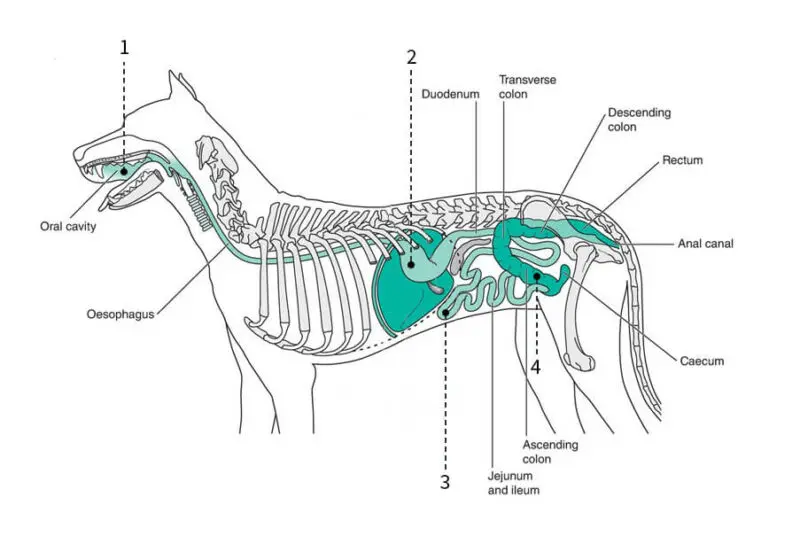
- Digestion begins in the mouth (oral cavity), where food is crushed and swallowed.
- It then travels down the oesophagus into the stomach, where it’s mixed with stomach acids and digestive enzymes.
- In the small intestine, digestion continues, and most nutrients are absorbed into the bloodstream.
- The remaining material is then passed into the large intestine, where water is absorbed before the waste is formed into stools and stored in the rectum until it is passed.
In dogs with CIE, chronic inflammation disrupts this process, making it harder for your dog to digest food, absorb nutrients, and maintain normal movement through the digestive system. This can lead to many of the signs commonly seen in dogs with CIE.
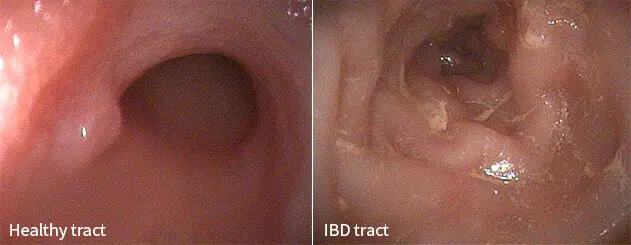
The above endoscopic images (albeit of a cat) show the difference between a healthy, smooth intestinal tract and the raised, inflamed tract typical of IBD.
Signs and symptoms of CIE
The symptoms of CIE in dogs vary depending on which part of the digestive tract is affected and the type of inflammatory cells involved. The most common signs to look out for include:
- Vomiting
- Diarrhoea
- Weight loss
- Abdominal discomfort
- Poor appetite
- Increased gut sounds (borborygmi)
- Mucus or fresh blood in the stool
Some dogs may also experience lethargy, flatulence or poor body condition,
If your dog is showing any of these signs, especially if they persist for more than a few weeks or keep returning, it’s important to see your vet for an evaluation.
Why did my dog develop CIE?
Firstly, it’s important to know that it’s not your fault, and it’s not caused by feeding the ‘wrong’ food.
Your dog’s immune system has different cells, each with a specific role. Some attack harmful invaders, such as bacteria or viruses. Others, called APCs (antigen-presenting cells), act as ‘sentinels’ or ‘patrol cells’. They monitor your dog’s body and decide whether something is a friend or a foe.
The exact cause of CIE is unknown, but it’s thought that these “sentinel” cells make a mistake. They wrongly identify harmless substances, such as proteins from food or healthy gut bacteria, as threats. This confusion triggers an unnecessary immune attack, causing the inflammation that we see in CIE. Essentially, the immune system is at work when it doesn’t need to be.
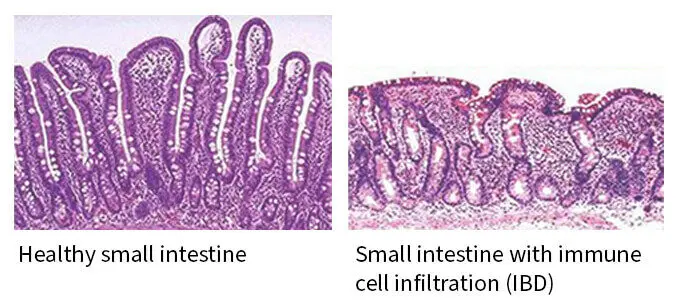
This histology image shows how inflammation causes the long, slender, absorptive villi (finger-like projections) in the small intestine to lose structure and become blunt. Because these villi are responsible for absorbing nutrients, damage to them reduces nutrient absorption and contributes to many of the clinical signs seen in dogs with CIE.
Although we cannot change the underlying immune dysfunction, in dogs with food-responsive CIE we can often remove the trigger. This is why dietary management is a key part of treatment for most dogs with CIE.
My vet thinks my dog has CIE, what happens next?
If your veterinarian suspects your dog has CIE, the next step is usually a dietary trial. As we’ve already discussed, by far most dogs with CIE are food responsive, meaning their symptoms improve when they are fed an appropriate diet.
For this reason, it makes sense to try dietary management before putting your dog through more invasive investigations, such as an endoscopy, or considering immunosuppressive medication.
However, finding the right diet isn’t always straightforward. There are several dietary approaches we can take, and the best option will depend on your dog’s signs and symptoms. The two most commonly recommended options are hydrolysed diets and home-prepared diets. Both are designed to provide complete and balanced nutrition while minimising the chance of triggering an immune response.
Hydrolysed diets
In most cases, your vet will likely recommend beginning with a hydrolysed diet. This type of diet contains protein that has been broken down into tiny fragments, making it less likely to trigger your dog’s immune system.
Hydrolysed diets sometimes get a bad rap, but they can be incredibly helpful, especially in severe CIE cases. Even if it’s just a temporary solution, they can make a big difference. You can read more about them here:
Of course, some dogs might refuse to eat a hydrolysed diet, or they may have other health concerns that need to be prioritised as well. You might also prefer to try a different dietary approach. In these cases, a home-cooked diet is the best option.
CIE and home-prepared diets
Home-prepared diets can be real game-changers because they let us control exactly what goes into your dog’s food while also making meals more palatable. Let’s look at some of the key nutritional adjustments to focus on.
Fat restriction
A fat-restricted diet can be an important part of nutritional management for some dogs with CIE, particularly where diarrhoea or malabsorption is present.
Why?
It all comes down to how your dog’s body processes and absorbs fat. It can be a little complex, but let me try to simplify it.
Fats are more complex and harder to break down than other nutrients. So when your dog eats fatty foods, the digestive system slows down the process of emptying the stomach into the intestines. This might sound like a bad thing, but it’s actually a clever way for the digestive tract to give the small intestine enough time to prepare for the fat and, in return, ensure proper absorption.
When fat isn’t properly absorbed (which can occur when inflammation is present), bacteria in the intestines and colon alter the unabsorbed fat into substances that prompt the colon to release more water, leading to diarrhoea and fluid loss.
In addition, poor fat absorption impairs bile acid secretion (substances released by the body in response to fat intake to aid digestion). When bile acids aren’t properly absorbed, they irritate the gut lining. This irritation causes the intestinal lining to leak more fluids, leading to (you guessed it) even more diarrhoea.
Of course, this prompts the question: how low should a low-fat diet be?
There’s no single answer because tolerance levels vary from dog to dog. In most cases, I start with 2 grams of fat per 100 kcal and gradually increase as the dog shows tolerance. In dogs with protein-losing enteropathy (PLE), however, I generally prefer to start lower, at less than 2 grams of fat per 100 kcal.
Novel ingredient diets
As mentioned earlier, a suspected cause of CIE in dogs is the immune system mistakenly identifying certain foods as threats. This is where a novel food diet can help. A novel food simply means an ingredient your dog hasn’t eaten before. Because your dog’s immune system has not previously been exposed to the new ingredient, it is less likely to recognise it as something it has become sensitised to and react against it. This, in turn, may help reduce inflammation in the gut and improve gastrointestinal signs.
Ideally, you should change both the carbohydrate and protein sources. However, protein is the key focus because it is more likely to trigger an immune response.
Remember to choose a low-fat protein source. For example, while lamb might be new to your dog, it’s high in fat and may not be well tolerated.
Kezie Foods offers a great selection of protein sources that aren’t commonly found in dog food, making them more likely to be novel options for your dog.
I should point out that there are no strict rules about using a novel protein diet exclusively. The best approach depends on your dog’s individual needs. For example, if you’ve found that your dog does well on rice and chicken – though these aren’t novel ingredients – there’s no need to change what’s working.
Keep it simple!
By keeping your dog’s diet simple, you not only lower the chance of a negative reaction but also make it easier to pinpoint the culprit if something goes wrong. For example, if you introduce three or four new ingredients at once and your dog reacts, it’s hard to know which one caused the issue.
Start with one novel protein and one carbohydrate, and feed these exclusively for at least 2 weeks. During this period, monitor for any adverse reactions before introducing supplements.
This initial diet isn’t nutritionally balanced and is only intended to help identify which foods work well for your dog. Once you know which foods are well tolerated, you’ll need to work with a qualified canine nutritionist to ensure your dog receives a complete and balanced diet.
Fibre
Fibre is a type of carbohydrate that passes through your dog’s digestive tract largely intact. It plays a crucial role in gut health. For example, some types of fibre (e.g., soluble fibre) are fermented by gut bacteria in the colon, producing beneficial volatile fatty acids (VFAs) that nourish and strengthen the cells lining the large intestine.
Most dogs with CIE respond to dietary fibre. Some benefit from added fibre, while others do better with a low-fibre diet.
For chronic large bowel diarrhoea (colitis), a moderate to high-fibre diet with soluble fibre (such as psyllium husk) can help firm stools, absorb excess water, and reduce inflammation.
Some dogs with CIE (particularly during flare-ups) may not tolerate too much fibre at first, so a gradual introduction is key. My approach is always case-by-case, but for most dogs, I start with 1 tsp of psyllium husk per 10 kg body weight, gradually adjusting the amount to find the optimal amount for each dog without causing adverse effects.
For small intestinal inflammation, a low-fibre diet is usually best. This approach helps ease digestion and reduce gut irritation.
Vitamins and minerals
Dogs with CIE are more prone to deficiencies in essential vitamins and minerals for a few key reasons:
- They may not be eating enough.
- They may struggle to absorb nutrients or lose them through their digestive system.
- Their bodies may not use nutrients effectively or may need more due to inflammation or other complications.
Even if your dog appears healthy and eats well, nutrient deficiencies can still occur if their diet doesn’t meet their nutritional needs. This is especially true for home-prepared diets, so make sure any home-prepared meals are created by someone with extensive experience in managing CIE cases and formulating homemade diets.
B Vitamins
B vitamins are particularly important for dogs with chronic inflammatory enteropathy (CIE).
- First off, B vitamins are key players in converting food into energy. This is especially crucial for organs with high energy demands, such as the gastrointestinal tract.
- When these vitamins are lacking, which is common in dogs with IBD, it can worsen intestinal malabsorption. This creates a vicious cycle where poor nutrient absorption leads to further depletion of B vitamins.
- B vitamins are essential for producing healthy red blood cells (which transport oxygen throughout the body). A deficiency can lead to anaemia, weight loss, and poor appetite.
Most research to date has been focused on the deficiencies of vitamins B9 (folate) and B12 (cobalamin) in dogs with CIE. This is why your vet will likely recommend a B12 and folate supplement, such as Cobalaplex, to support your dog’s health.
Supplements
One of the challenges in managing dogs with CIE is that the very supplements that might help them aren’t always well-tolerated. For that reason, I typically introduce supplements only after the dog has been stable for a while.
Omega-3 Fatty Acids
Omega-3 fatty acids, particularly eicosapentaenoic acid (EPA) and docosahexaenoic acid (DHA) found in fish oil, are known to have anti-inflammatory properties. In dogs with IBD, these fatty acids can help calm inflammation by reducing the production of certain chemicals that the immune system releases in response to triggers.
While there isn’t a one-size-fits-all recommendation, if dietary fat doesn’t need to be heavily restricted, a dose of 300 mg of EPA and DHA combined per 10 kg of body weight is a good starting point.
When choosing a fish oil supplement, pay attention to the amounts of EPA and DHA listed on the label. For more tips on selecting the best fish oil for your dog, click here.
I usually recommend Wiley’s Fish Oil Minis and Nordic Naturals Omega-3 Pet for smaller dogs (up to 10kg), and Lamberts Fish Oil for larger dogs (over 10kg).
Probiotics
Probiotics are gaining popularity, but what exactly are they, and what does the science say about their use in CIE dogs?
Probiotics are live bacteria that help maintain a healthy gut microbiome, i.e. the community of microbes living in your dog’s digestive tract. A healthy microbiome is crucial because it aids digestion, enhances nutrient absorption, and strengthens the immune system.
In dogs with CIE, the gut microbiome often becomes imbalanced (known as dysbiosis), leading to inflammation, diarrhoea, vomiting, and other gut issues. It’s logical to assume that by giving a probiotic supplement, we can help restore this balance and, in turn, help reduce inflammation and improve overall gut health.
What does science say?
The good news
A 2014 study involving the probiotic VSL#3 showed significant improvements in both clinical symptoms and overall gut health in treated dogs. Not only did the dogs experience less inflammation, but the presence of beneficial bacteria in their guts also increased. This is particularly important because, as we discussed earlier, a healthier gut microbiome leads to better digestion, improved nutrient absorption, and a stronger immune system.
One key finding of the study was that VSL#3 increased the number of regulatory immune cells. These are special cells that help keep the immune system in check, preventing it from overreacting and causing unnecessary inflammation.
These findings suggest that probiotics may offer a unique advantage in managing IBD by addressing not only symptoms but also the underlying immune response that contributes to the condition.
However
While this study is encouraging, its small size and open-label design mean that more research is needed to provide a clearer picture.
Lastly, before you go out and buy a probiotic, it’s important to remember that not all probiotics are the same; different strains of bacteria have varying effects on gut health, and the specific benefits can depend on factors like the strain used, the dosage, and the individual needs of the dog.
Implementing a dietary plan
Now that we’ve covered the key nutritional strategies for managing CIE, let’s discuss how to implement a dietary plan. Remember, every dog is unique, so these steps are guidelines only.
The first four steps are straightforward and can be done without professional help. Steps 5 to 7, however, need the help of a qualified nutritionist. If your dog has multiple health concerns, it’s best to consult a nutritionist from the start.
- Choose a low-fat novel protein and carbohydrate. Feed in a ratio of 1/3 protein to 2/3 carbohydrate.
- Gradually introduce the new diet over 7 days to avoid further gastrointestinal upset.
- Feed small, frequent meals. You can adjust this based on your dog’s response to the diet. For example, if your dog is doing well, you can slowly reduce the number of feedings.
- For the next 2 weeks, feed only this diet and avoid any treats or table scraps that could interfere with the dietary trial. If your dog doesn’t do well with the two novel foods, you’ll need to go back to step 1 and try two new foods.
- Once your dog is stable, we need to add calcium to provide the correct calcium-to-phosphorus balance.
- The next step is adding vitamins and minerals to balance the diet to NRC requirements.
- Lastly, consider adding a probiotic, followed by an omega-3 fatty acid supplement.
The full transition to a new diet is often a slow process. Be patient – persistence pays off! Once you see improvements in your dog’s symptoms, you’ll know you’ve succeeded, and your dog can stay on this plan long-term.
Other relevant information
Raw vs cooked: What is best for dogs with CIE?
Raw feeding has become popular in recent years. While I usually don’t try to sway anyone toward a particular type of diet, when it comes to dogs with CIE, a raw diet might not be the best option. Here’s why:
Firstly, raw diets carry the risk of harmful bacteria. For a healthy dog, the risk might be relatively low. However, for a dog with CIE, the risk is much higher because the inflammation has weakened the digestive tract, leaving the dog more vulnerable to infections.
Secondly, raw diets tend to be high in fat. When food is cooked, some of this fat can be skimmed off, making it easier on the digestive system and less likely to trigger a flare-up.
Water
Dogs with CIE often suffer from diarrhoea and vomiting, which can lead to dehydration quite rapidly. This loss of fluid can decrease essential electrolytes, such as sodium, potassium, and chloride, causing your dog to feel weak, lethargic, and unwell.
You can read more about water intake here, including tips and ideas for encouraging your dog to drink more.
Key Takeaways
Managing CIE in dogs can be a challenging journey for everyone involved. In my experience, dogs either respond well to dietary changes or don’t. You can usually figure this out by following the plan above. Keep in mind that there’s no way to predict how a dog will react to a new food.
If you’re lucky, you’ll find the right food on the first try. However, sometimes it takes several attempts with different novel ingredients to find the one that works for your dog.
In practice, I usually recommend trying three different dietary trials before concluding that a dog is unlikely to be food-responsive. However, it’s important that each trial is carried out properly; otherwise, it can be difficult to judge whether the diet is working.
Always work closely with your dog’s healthcare team. With patience and persistence, you can help your dog live a happier and healthier life, even with a CIE diagnosis.
We have reached the end of the blog, and I hope the information has helped you better understand the necessary changes to manage your dog. If you have any further questions or need help, don’t hesitate to contact me. Your feedback and suggestions are always welcome.
About Kristina
Kristina Johansen, MSc cand. (Animal Nutrition), Cert ACN, is a canine nutritionist with over 15 years of experience. She is a member of the American Academy of Veterinary Nutrition (AAVN) and the European Society of Veterinary & Comparative Nutrition (ESVCN). She specialises in formulating balanced home-prepared diets that meet NRC guidelines, particularly for dogs with medical conditions that require careful dietary management. More about Kristina →
Disclaimer: This blog is for informational purposes only. Please do not create or modify your dog’s diet based on this information. Diet formulation for dogs with health concerns is complex and should be done by a qualified canine nutritionist.Dog Nutrition Consultations
If your dog has been diagnosed with IBD and you would like help creating a safe, balanced home-prepared diet, you can learn more about my nutrition consultations below.
Book a Consultation